
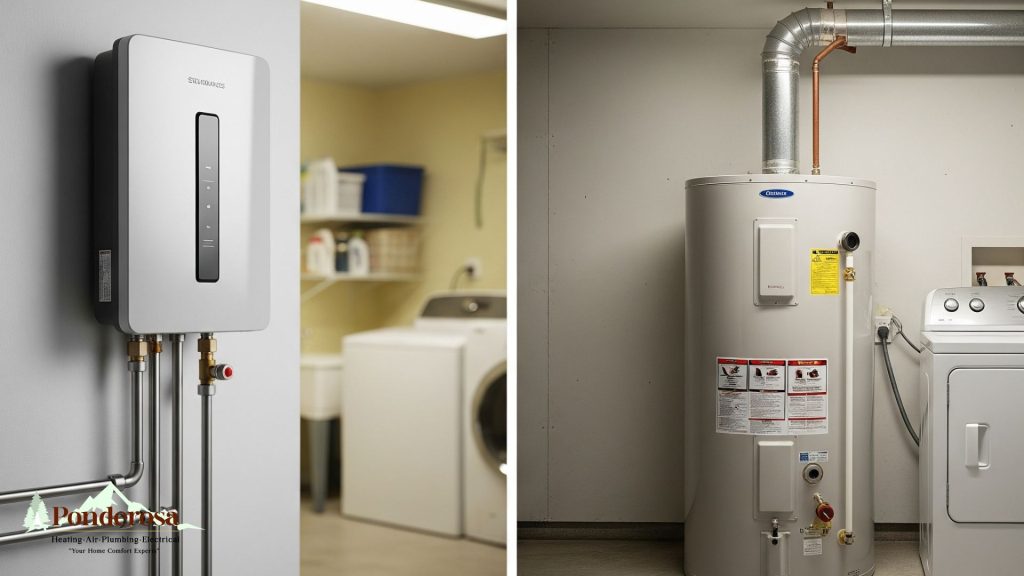
Homeowners can choose between conventional storage tank, tankless, and heat pump water heaters. Traditional tank models offer reliable performance using gas or electricity, while tankless systems provide on-demand hot water and increased energy efficiency. Hybrid heat pump models maximize efficiency by transferring heat from the surrounding air to the water.
Selecting the right system depends on fuel availability, household hot water demand, and long-term energy costs. Evaluating factors like installation requirements and lifetime value helps ensure a balance between upfront investment and monthly savings. Professional installation is essential for safety, system longevity, and compliance with local building codes.
Hot Water Heater Types: Which is Right for Your Needs?
Here at Ponderosa, we understand that your water heater is one of the unsung heroes of your home. You rely on it every single day for hot showers, clean dishes, and fresh laundry. But when it’s time for a replacement, the sheer number of options can feel overwhelming. Choosing a water heater isn’t just about getting hot water; it’s about finding the right balance of performance, efficiency, and cost for your family’s specific needs.
As your local experts serving Southwest Denver and the Front Range, we’ve installed countless systems and have seen firsthand what works best in Colorado homes.
This guide is designed to walk you through the different hot water heater types, helping you make an informed decision that brings you comfort and peace of mind for years to come. We believe that an educated customer is a happy customer, and our goal is to empower you with the knowledge to select the perfect system for your home.
Conventional Storage Tank Water Heaters
The Workhorse
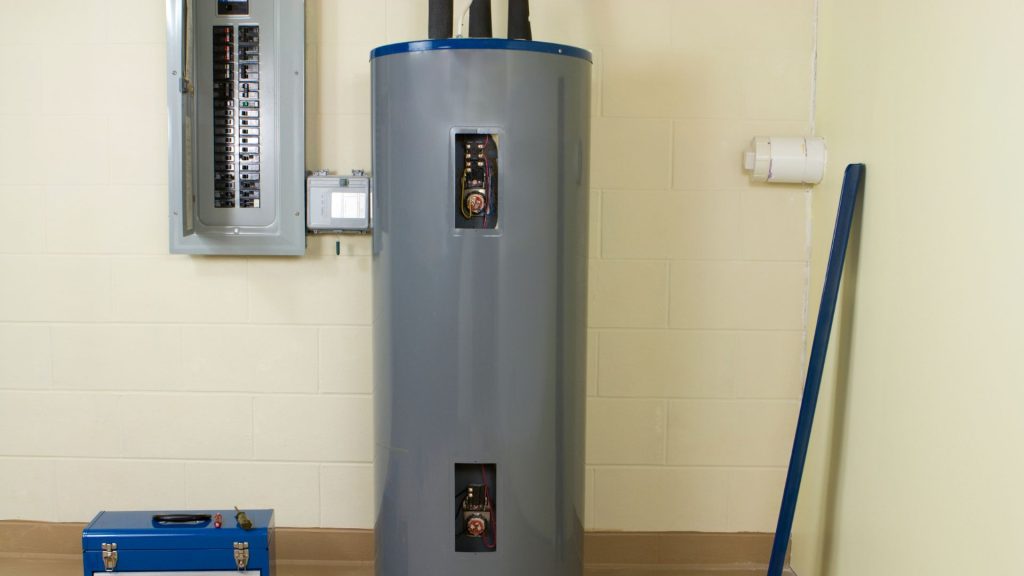
When you picture a water heater, you’re most likely thinking of a conventional storage tank model. These are the most common type found in homes across the country, and for good reason. They are reliable, relatively inexpensive to purchase, and have a long track record of performance. We often recommend these units for homeowners looking for a straightforward, budget-friendly solution.
How They Work
The principle is simple: a large, insulated tank holds a reservoir of water, typically between 30 and 80 gallons. This water is continuously heated and kept at a set temperature, ready for you to turn on a tap. A thermostat monitors the water temperature, and when it drops below the set point (either from use or just standby heat loss), the heating mechanism kicks in to bring it back up. This mechanism can be powered by either natural gas or electricity.
Gas Water Heater Guide: Pros and Cons
Gas-powered storage tank heaters are a very popular choice, especially in areas with access to natural gas lines. They are known for their rapid heating capabilities.
- Pros: Gas heaters generally have a lower operating cost than their electric counterparts because natural gas is often cheaper than electricity. They also heat water much faster. This means a quicker recovery time after the tank has been depleted, which is a significant advantage for larger families who might use a lot of hot water in a short period.
- Cons: The initial purchase and installation cost for a gas model is typically higher than an electric one. They also require proper venting to the outside to safely exhaust combustion gases, which can sometimes complicate the installation process. They have a slightly more complex design with more components like burners and gas valves that can require maintenance over time.
Electric Water Heater Pros and Cons
Electric storage tank heaters offer simplicity and flexibility in installation, making them a viable option for many homes.
- Pros: Electric models are generally less expensive to purchase upfront. They also don’t require any venting, which means they can be installed in more locations throughout a home, such as a small closet or utility room where venting would be impossible. They are simpler in design, which can sometimes translate to a longer lifespan with fewer repairs.
- Cons: The biggest drawback is the higher operating cost. Electricity is usually more expensive than natural gas, so your monthly utility bills will likely be higher. They also have a much slower recovery rate. Once you’ve used up the hot water in the tank, it takes significantly longer to heat a new supply, which can be an inconvenience for households with high demand.
Tankless Water Heaters
The Modern Alternative
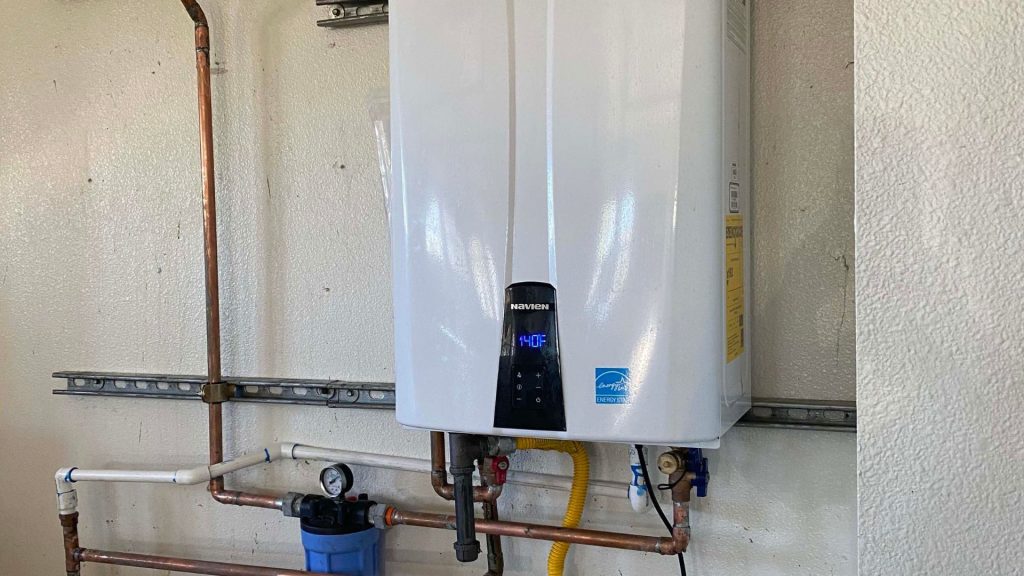
A growing number of homeowners are making the switch to tankless models, often called an instant hot water heater. Instead of storing a large volume of hot water, these units heat water on demand, providing a continuous and endless supply. This technology represents a significant shift in how we get our hot water and offers compelling benefits, particularly for energy efficiency.
The Magic of On-Demand Hot Water
When you turn on a hot water tap, cold water flows into the tankless unit. A flow sensor detects the water movement and ignites a powerful gas burner or electric element. The water travels through a series of coils in a heat exchanger and is heated to your desired temperature almost instantaneously before traveling directly to your faucet. When you turn the tap off, the unit shuts down completely, using no energy. This process provides an endless supply of hot water—you’ll never run out mid-shower again.
Tankless vs Tank Water Heater: The Big Debate
The decision between a tankless and a traditional tank heater is one of the most common questions we encounter. The choice often comes down to balancing upfront investment with long-term savings and lifestyle needs.
- Endless Hot Water: This is the number one benefit of tankless systems. For large families or homes with deep soaking tubs, this can be a game-changer.
- Energy Efficiency: By eliminating standby heat loss—the energy wasted keeping dozens of gallons of water hot 24/7—tankless heaters are significantly more efficient. This commitment to energy efficient hot water can lead to substantial savings on your utility bills over the life of the unit.
- Space Savings: Tankless units are small and wall-mounted, freeing up valuable floor space that would otherwise be occupied by a bulky tank. This is a huge plus for smaller homes, condos, or those looking to reclaim a utility closet.
- Longer Lifespan: With proper maintenance, tankless water heaters can last 20 years or more, which is nearly double the average lifespan of a traditional tank heater.
- Higher Upfront Cost: The primary drawback is the initial investment. Tankless units and their installation are more expensive than storage tank models. The installation can be more complex, sometimes requiring upgrades to your gas line or electrical panel to meet the unit’s high-power demands.
Heat Pump Water Heaters (HPWH)
The High-Efficiency Champion
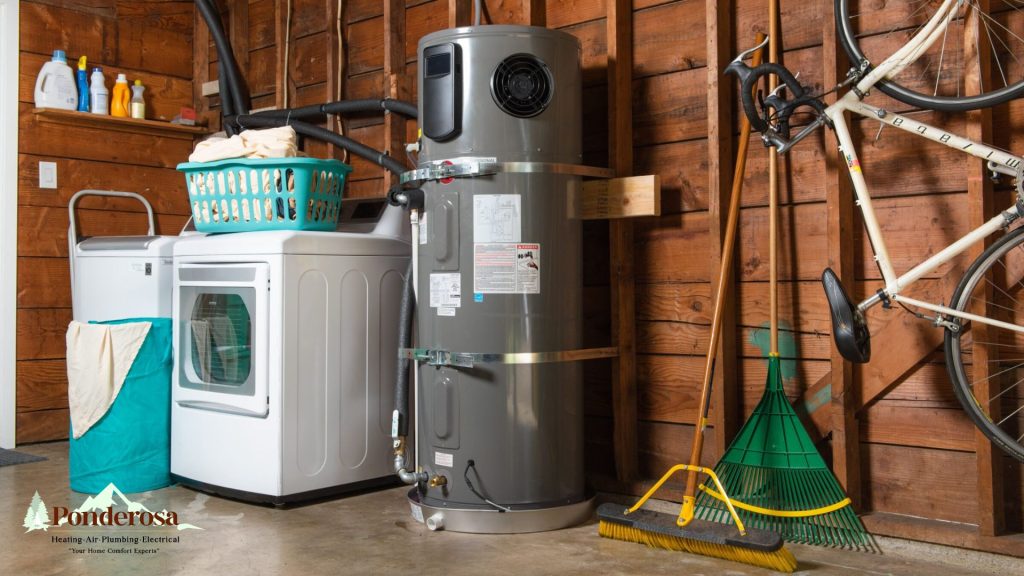
For those prioritizing maximum efficiency, the heat pump water heater, or hybrid water heater, is an incredible piece of technology. While it uses a storage tank like a conventional heater, its method of heating the water is completely different and remarkably efficient.
How They Work
Instead of generating heat directly, a heat pump water heater works like a refrigerator in reverse. It pulls heat from the surrounding ambient air and transfers it to the water in the tank. An electric heating element is also included as a backup (hence the “hybrid” name) for times of very high hot water demand. According to the U.S. Department of Energy, they can be two to three times more energy efficient than conventional electric resistance water heaters.
- Pros: The standout benefit is unparalleled energy efficiency, which translates into the lowest operating costs and significant long-term savings on your electric bill. They are an excellent choice for achieving energy efficient hot water in homes without access to natural gas.
- Cons: HPWHs have a high upfront purchase price, often the most expensive of all the options. They also have specific installation requirements. They need to be installed in a location with at least 1,000 cubic feet of uncooled air space to draw heat from (like a basement or garage) and they produce cool, dehumidified air as a byproduct. They also make some noise while operating, similar to a small dehumidifier.
Key Factors for Choosing a Water Heater
Now that you understand the main hot water heater types, how do you decide? Choosing a water heater involves evaluating several key factors specific to your home and lifestyle.
Fuel Type, Availability, and Cost
Your first consideration is the fuel source. Do you have a natural gas line running to your home? If so, a gas heater is often the most cost-effective to operate. If you’re in an all-electric home, your choices will be between a standard electric tank, a tankless electric model, or a heat pump water heater. We can help you analyze the long-term operating costs of each to see what makes the most financial sense.
Your Family’s Hot Water Demand
Consider your household’s peak hot water usage. Do multiple people shower around the same time in the morning? Do you often run the dishwasher and washing machine simultaneously?
For storage tank models, you’ll want to look at the First Hour Rating (FHR), which tells you how many gallons of hot water the unit can supply in an hour of heavy use. For tankless models, we look at the flow rate (gallons per minute) to ensure the unit can handle your simultaneous use needs, which is especially important in our cold Colorado climate where the incoming water temperature is lower.
Energy Efficiency and Lifetime Value
Don’t just look at the purchase price. A cheaper, less efficient model can cost you far more in the long run through higher utility bills. We always encourage customers to look at the bright yellow EnergyGuide label on each unit. Investing in a more efficient model, like a tankless or heat pump system, can pay for itself over time. This is where the concept of lifetime value becomes crucial in your decision-making process.

The Ponderosa Promise
Expert Installation Matters
Selecting the right model is only half the battle. The quality of the installation is just as important for the safety, efficiency, and longevity of your system. A poor installation can lead to code violations, dangerous gas or carbon monoxide leaks, water damage, and reduced performance. This is not a DIY job; it requires a licensed and experienced professional.
When you need a new water heater installation in Denver or a complete water heater replacement in Colorado, our team at Ponderosa has the expertise to do the job right. We ensure that every installation, from gas line connections and electrical wiring to proper ventilation and seismic strapping, is done precisely and up to code. We handle the entire process, from helping you select from the best Ponderosa water heaters for your needs to the final testing of the new unit. We treat your home with respect, work cleanly and efficiently, and stand behind our work with a commitment to your complete satisfaction.
Making the right choice for your home’s hot water system is a significant decision. We hope this guide has clarified the options available to you. Our team is always here to answer your questions and provide a personalized recommendation based on your unique home, family, and budget.
Ready to Enjoy Reliable, Efficient Hot Water?
Let our experienced technicians help you find the perfect water heater for your home. We provide expert advice and flawless installation to ensure you get the best performance and value from your investment. Call us today at 720-470-1133 or fill out our online form to schedule your free, no-obligation quote. We waive our standard $189 service fee when you proceed with the work, making your decision to upgrade even easier.
