
Flickering lights in older homes often signal underlying electrical issues ranging from simple technical mismatches to severe safety hazards. Common causes include incompatible LED bulbs, heavy appliance surges, and overloaded circuits. Understanding these signs helps homeowners distinguish between minor inconveniences and urgent electrical emergencies requiring professional intervention.
More serious concerns involve loose connections or outdated aluminum wiring, which pose significant fire risks. While external factors like grid instability can cause fluctuations, internal symptoms such as burning smells or warm outlets necessitate immediate attention. Professional inspections ensure electrical systems meet modern demands and local safety codes.
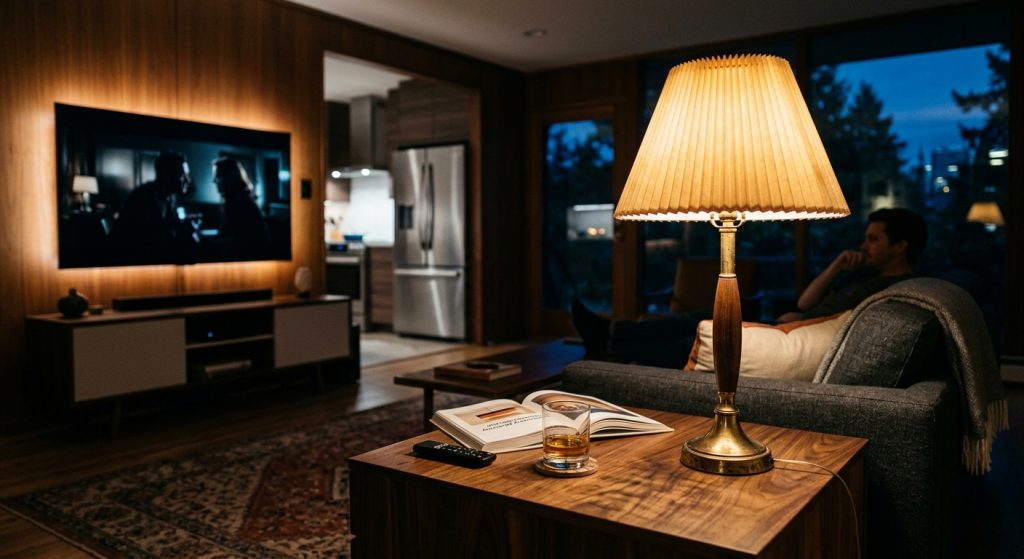
It starts as a minor annoyance: you’re sitting in your living room reading a book, and the lamp dims for a split second. Then, it happens again in the kitchen. Eventually, you find yourself asking, “Why are my lights flickering?” If you live in one of the classic mid-century homes in Harvey Park, Westwood, or throughout the broader Denver Metro Area, you aren’t alone. As our modern power demands increase, older electrical grids struggle to keep up. At Ponderosa Heating, Air, Plumbing, Electrical, we want to help our local neighbors understand the difference between a harmless quirk and a serious safety hazard.
If the lights flicker in the house frequently, it’s your electrical system’s way of asking for help. Here are the most common causes, the potential dangers you need to look out for, and how to fix them.
1. The LED Bulb and Old Dimmer Mismatch (The Simple Fix)
Before you panic and assume your house needs to be completely rewired, rule out the simplest explanation. Sometimes, a flickering light is completely isolated to a single fixture. If a bulb is simply not screwed in tightly, the socket’s connection will be inconsistent, causing a rapid flicker.
However, there is a much more common culprit today: mismatched technology. Many of our neighbors decide to save energy by swapping out their old, hot incandescent light bulbs for modern, energy-efficient LED bulbs. But if you put a modern LED bulb into a light fixture controlled by a dimmer switch from the 1990s or early 2000s, you will almost certainly experience a strobe-light effect.
Older dimmer switches work by rapidly cutting the electrical current off and on to reduce the total power going to the bulb (which dims an incandescent bulb smoothly). LED bulbs use internal circuitry that doesn’t respond well to this “chopped” electrical wave, resulting in wild flickering or buzzing.
Pro Tip
Turn off the light, let the bulb cool, and simply tighten it. If the flickering stops, you’ve solved the problem! If you have LEDs on a dimmer switch, verify that the switch is explicitly rated as “LED compatible.” If it isn’t, swapping the switch is a quick and affordable fix.
2. Large Appliances Pulling Too Much Power
Have you noticed flickering lights when AC turns on? This is incredibly common in Southwest Denver. Heavy-duty appliances—like your central air conditioner, a heat pump, a washing machine, or a refrigerator—require a massive surge of electricity just to start their internal motors.
If your home still relies on an older 60-amp or 100-amp electrical panel, that sudden demand for power starves the rest of the circuits in your home, causing a temporary “voltage drop.” This drop is exactly what makes the lights dim across the house. While a very slight, split-second dimming can be normal, severe or prolonged flickering means your electrical panel is overburdened and likely needs an upgrade to safely handle the load.
Furthermore, these heavy electrical surges can actually damage the sensitive circuit boards inside your modern televisions, computers, and smart home devices.
Pro Tip
Take note of the timing. If your lights only flicker when a major appliance cycles on, it’s a clear sign that your electrical panel needs a professional evaluation. To protect your electronics from these internal power spikes, ask us about installing a whole-home surge protector directly at your electrical panel.
3. Loose Connections and Aluminum Wiring (The Hidden Danger)
This is where flickering lights turn from a nuisance into a severe safety hazard. Loose wiring is one of the leading causes of house fires, according to the National Fire Protection Association (NFPA).
Over decades of daily use, the wire connections in your outlets, light switches, and your main electrical panel can expand, contract, and gradually wiggle loose. When electricity tries to jump across a loose gap, it creates an “arc.” This arcing produces immense heat, which can easily melt wire insulation and spark a fire behind your drywall.
If your home was built or remodeled in the 1960s or 70s—which is very common in our local Southwest Denver neighborhoods—you might also have aluminum wiring instead of traditional copper. Aluminum expands and contracts much more than copper when electricity flows through it, making it notoriously prone to loose connections and arcing. If your flickering lights are accompanied by a buzzing sound or a faint burning smell, you need a fix for dangerous flickering lights immediately.
Pro Tip
Never ignore a light switch or outlet cover that feels warm to the touch. This is a massive red flag for loose, arcing wires. Turn off the breaker to that room immediately and call a local pro.
4. Overloaded Circuits
If your lights flicker when you plug in a space heater in the living room while someone else is using a hairdryer in the bathroom, you are overloading a single electrical circuit. When too many high-wattage devices are forced to share the same wire, the breaker should trip to stop the flow of power and protect the system.
However, if your panel is old, or the breaker has become faulty, the circuit will overheat instead of tripping. This causes dangerous voltage fluctuations and, you guessed it, flickering lights. Adding dedicated circuits for your heavy electronics is the best way to distribute the power safely and protect your home. Because upgrading your panel and adding circuits is a vital investment in your home’s safety, we proudly offer flexible financing options to make the process easier for our neighbors.
Pro Tip
Try moving heavy-draw appliances (like space heaters, microwaves, or window AC units) to different wall outlets that are on entirely separate circuits to see if the flickering stops.
5. Neighborhood Grid Issues and Weather
Sometimes, the problem isn’t inside your home at all. If you notice your lights flickering, take a quick peek out the window at your neighbors’ houses or the streetlights. Extreme weather, a vehicle striking a utility pole on a busy local road like Federal Blvd or Alameda Ave, or localized issues with your utility provider can cause temporary power fluctuations for the entire block. If the whole neighborhood is flickering, it’s a grid issue, and your utility company is likely already working to fix it.
Local Homeowner FAQ: Flickering Lights
To help our neighbors troubleshoot effectively, here are a few of the most common questions we get asked out in the field regarding electrical issues:
Are flickering lights an electrical emergency?
It depends on the scope of the problem. If a single bulb is flickering, it is usually not an emergency (just a loose bulb or a bad switch). However, if lights across multiple rooms are flickering, or if the flickering is accompanied by a buzzing noise, a burning plastic smell, or scorch marks on your outlets, it is an absolute emergency. Kill the power at the main breaker and call us immediately.
Can flickering lights cause a house fire?
Yes. While the flicker itself isn’t the fire, it is often a symptom of a severe fire hazard. Loose wiring, arcing electricity, and overloaded circuits all cause lights to flicker, and all of these issues generate extreme heat that can easily ignite the wood and drywall inside your home.
Why do my lights flicker when the wind blows in Denver?
We get some incredibly high winds here across the Front Range. When severe wind gusts hit, overhead utility lines can sway significantly. If these lines temporarily touch tree branches or bump into each other, it causes a brief short in the grid, which translates to a flicker inside your home. If your lights flicker only during heavy windstorms, it’s likely a utility grid issue. But if they flicker on a calm, sunny day, the problem is inside your walls.
Why DIY Electrical Work Fails (And Why a Local Pro is Safer)
We know it’s tempting to search for a quick online tutorial and try to fix electrical issues yourself. However, behind your walls lies enough raw voltage to cause fatal shocks. Without the proper training and diagnostic tools, trying to hunt down a loose neutral wire or navigate strict local permitting codes can easily result in a devastating house fire.
If you want an electrician for flickering lights Colorado homeowners trust, rely on a licensed professional. We know the local codes, we understand the quirks of older Metro Area grids, and we are dedicated to protecting your property so you can sleep soundly. We are here to fix the problem right the first time.
Let Us Protect Your Home’s Electrical System
Don’t ignore the warning signs your house is giving you. Whether it’s a simple switch replacement, installing a whole-home surge protector, or completing a necessary panel upgrade, we are here to help keep your home bright, functional, and safe.
Our initial service call fee is $189, but this is completely waived (making your quote free) if you choose us for the work.
Call us today at 720-470-1133 or schedule your service online for an expert inspection.
Ponderosa Heating, Air, Plumbing, Electrical
Golden Office: 15750 S Golden Rd #J, Golden, CO 80401
Conifer Office: 26267 Conifer Rd Unit 209, Aspen Park, CO 80433
Phone: 720-470-1133
