
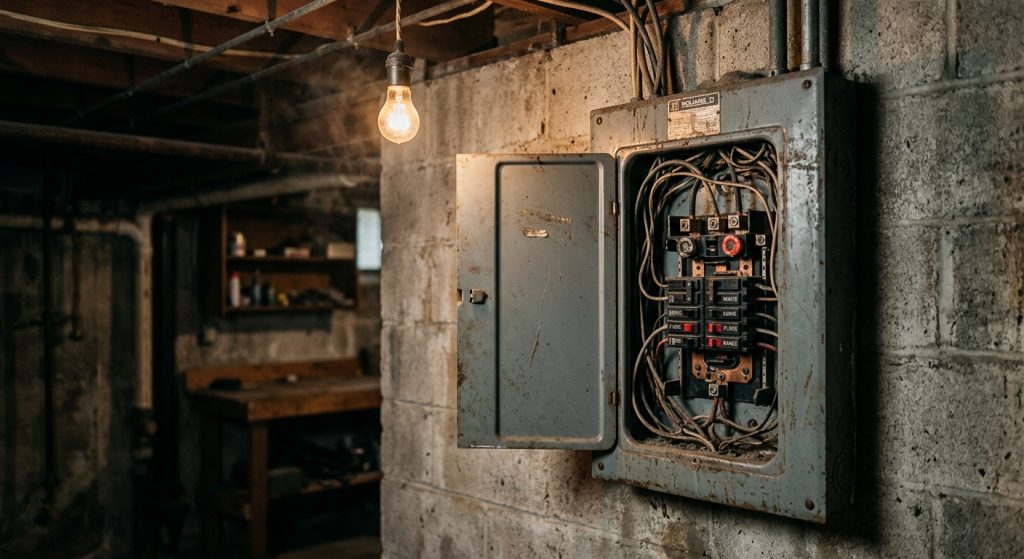
Modern household appliances often exceed the capacity of older electrical panels, posing significant safety risks. Inadequate power distribution leads to performance issues and potential fire hazards. Identifying early warning signs is essential for maintaining a safe home electrical system while preventing catastrophic equipment failure and ensuring reliable power distribution.
Visible indicators of a failing system range from frequent breaker trips and flickering lights to physical symptoms like heat or unusual odors. Upgrading to modern breaker panels ensures compatibility with contemporary power demands. Professional inspections help homeowners address outdated components and hazardous wiring to maintain safety standards and property value.
Your electrical panel is the beating heart of your home’s power system. It takes the electricity coming from the grid and safely distributes it to every outlet, switch, and appliance you own. But as our modern power demands grow, older panels can struggle to keep up.
If you live in one of the beautiful, established neighborhoods in Southwest Denver—like a mid-century home in Harvey Park, a classic build over in Westwood, or near Athmar Park—your home’s original electrical system might be feeling the strain. Many of these homes were built with 60-amp or 100-amp electrical service. That was perfectly fine for the 1950s or 60s, but it simply isn’t enough to safely power today’s central air conditioners, hot tubs, home offices, and electric vehicle chargers.
At Ponderosa Heating, Air, Plumbing, Electrical, we want to help protect our local neighbors from the safety hazards of an overloaded electrical system. Before you end up in the dark (or worse, facing an electrical fire), here are the top signs you need a new electrical panel.
1. Your Breakers Trip Constantly
It’s normal for a breaker to trip occasionally if you overload a specific circuit—like running a high-wattage hairdryer and a space heater at the exact same time. However, if you find yourself constantly walking out to the garage or basement to reset flipped breakers, your system is crying out for help.
Breakers are designed to trip to stop the flow of electricity when a circuit is overloaded, preventing wires from melting. If this is happening weekly, it means your home is demanding more power than your current panel can safely provide. This is a primary indicator that you need a circuit breaker panel upgrade (usually to a 200-amp system) to handle your daily electricity needs without interruption.
Pro Tip: Before resetting a tripped breaker, unplug any heavy-draw appliances on that circuit. If it immediately trips again when you flip it, don’t force it to stay on. Call a local pro to help protect your home from an electrical fire.
2. Flickering or Dimming Lights
Do your living room lights dim every time the air conditioner or refrigerator kicks on? This happens when your larger appliances are drawing too much power, effectively starving the rest of your home’s electrical circuits.
When a heavy-duty appliance like a new central AC in Denver or a heat pump starts up, it requires a massive surge of power. If your panel is undersized, that surge causes a “voltage drop” across the rest of the house, resulting in those annoying brownouts and flickering lights. A main service panel upgrade ensures your home has the electrical bandwidth to power everything smoothly, protecting your sensitive electronics from power fluctuations.
Pro Tip: Pay attention to when the flickering happens. If the lights only dim when your central AC or a large appliance kicks on, it’s a strong sign your main panel needs an upgrade to handle the heavy load.
3. You Still Have an Old Fuse Box
If you open your panel door and see round, screw-in fuses instead of modern toggle switches, you are living on borrowed time. Fuse boxes are severely outdated technology and were never designed to handle the heavy electrical loads of today’s smart TVs, computers, and modern kitchen appliances.
Worse yet, many insurance companies will actually charge higher premiums—or drop coverage altogether—if they find out a home still relies on a fuse box due to the elevated fire risk. If you’re looking for a fuse box replacement Colorado residents can trust, it’s time to bring your system into the 21st century to protect your property and your family.
Pro Tip: If you decide to upgrade your old fuse box to a modern breaker panel, give your homeowner’s insurance agent a call afterward. Many providers offer a discount on premiums once your home meets modern safety standards.
4. The Panel Box Feels Warm or Hot
Electricity generates a small amount of heat as it flows, but your electrical panel’s metal enclosure should never feel hot to the touch. If you place your hand on the outside of the box and it feels noticeably warm, it’s a sign that the wiring inside is severely overloaded or damaged.
Excessive heat degrades wire insulation and is a direct precursor to an electrical fire. If your panel is hot, do not ignore it. This warrants an immediate inspection by a professional.
Pro Tip: To check your panel safely, gently place the back of your hand against the closed metal door. Never open the panel to touch the breakers or wires inside if you suspect overheating.
5. Burning Smells or Scorch Marks
This is a major red flag that requires immediate attention. If you ever smell a faint burning, melting plastic, or a “fishy” odor near your electrical panel, or if you see brown scorch marks around the breakers or wall outlets, you need to act right away.
This means your wires are actively overheating and melting their protective insulation. In Denver’s dry climate, exposed and overheating wires are a severe home fire hazard that can spark in an instant. Don’t wait to see if the smell goes away—this is the most urgent reason to call for an electrical panel replacement Southwest Denver locals rely on.
Pro Tip: Make sure everyone in your family knows exactly where the main electrical shut-off is located. If you smell burning plastic, you want to be able to kill the power to the entire house quickly while you wait for us to arrive.
6. Buzzing or Crackling Sounds
Electricity should flow silently. If you hear a faint buzzing, sizzling, or crackling noise coming from your breaker box, it means there is a loose connection or a faulty breaker “arcing.”
Arcing happens when electricity jumps across a gap in a loose connection, creating a tiny, incredibly hot spark. Over time, this heat damages the panel and can easily start a fire. If your panel sounds like it’s buzzing like a bee or crackling like a campfire, it is dangerous and requires a professional set of eyes immediately.
Pro Tip: If you can pinpoint which specific breaker is making the buzzing noise, flip it to the “off” position immediately (if it is safe to do so). This stops the arcing and removes the immediate fire hazard until we can fix the underlying issue.
7. Rust or Water Damage on the Panel
Many electrical panels in older Southwest Denver homes are located in basements or utility rooms that may have seen a bit of dampness over the decades. If you notice rust stains on the metal box or white, chalky corrosion around the breakers, water has found its way inside.
Moisture and electricity are a deadly combination. Corrosion ruins the sensitive connections inside the panel, making it more likely to fail when you need it most.
Pro Tip: Take a quick look around your utility room. Is there a leaky pipe overhead, or perhaps a weeping foundation wall nearby? Identifying and fixing the source of the moisture is just as important as replacing the damaged electrical panel.
8. You Have an Outdated or Recalled Panel Brand
Many homes built or remodeled in the 1960s, 70s, and 80s were fitted with panels made by Federal Pacific Electric (FPE) or Zinsco. These specific brands have since been the subject of intense scrutiny by groups like the Consumer Product Safety Commission and lost their safety ratings because their breakers notoriously fail to trip when overloaded.
If you open your panel door and see the names “Federal Pacific,” “Stab-Lok,” or “Zinsco,” your home is at a higher risk for an electrical fire. Replacing these obsolete panels is one of the smartest investments you can make in your home’s safety.
Pro Tip: Not sure what brand you have? Look for a manufacturer sticker on the inside of the panel door. If your home was built between the 1950s and 1980s, it’s highly recommended to double-check this for peace of mind.
9. You’re Relying on Power Strips and Extension Cords
Older homes in the Metro Area are notorious for having only one or two outlets per room. If your home doesn’t have enough outlets, and you find yourself daisy-chaining power strips together or running extension cords under rugs just to plug in your devices, your electrical system is overburdened.
Extension cords are meant for temporary use, not as permanent wiring solutions. A new panel, combined with adding dedicated circuits and new wall outlets, will eliminate cord clutter, make your home safer, and add a ton of convenience to your daily routine.
Pro Tip: Take a quick inventory of your heavy electronics (like space heaters, window ACs, or heavy-duty computers). These devices should always be plugged directly into the wall, never a power strip, to prevent overloading the circuit.
Why DIY Electrical Work Fails (And Why a Local Pro is Safer)
We know it can be tempting to watch a quick video online and try to do the electrical repairs yourself, but please, leave the panel work to the pros. Your main electrical panel contains enough raw voltage to cause fatal shocks, and a single loose connection or improperly sized wire can easily spark a devastating house fire.
Our licensed electricians know the older grids in the Metro Area inside and out. We know how to navigate the permitting, the local codes, and the unique quirks of older Southwest Denver homes. When it comes to a residential electrical panel install, trusting a trained, local professional is the only way to guarantee the job is done safely and correctly. We are here to fix the problem right the first time and protect your home.
Ready to Upgrade Your Home’s Safety?
If you’ve noticed any of these warning signs, don’t wait for a complete power failure or an emergency. Let our friendly experts evaluate your electrical system.
Our initial service call fee is $189, but this is completely waived (making your quote free) if you choose us for the work.
Call us today at 720-470-1133 or fill out our convenient online form to schedule your inspection. We’re ready to help keep your home bright, safe, and fully powered.
