
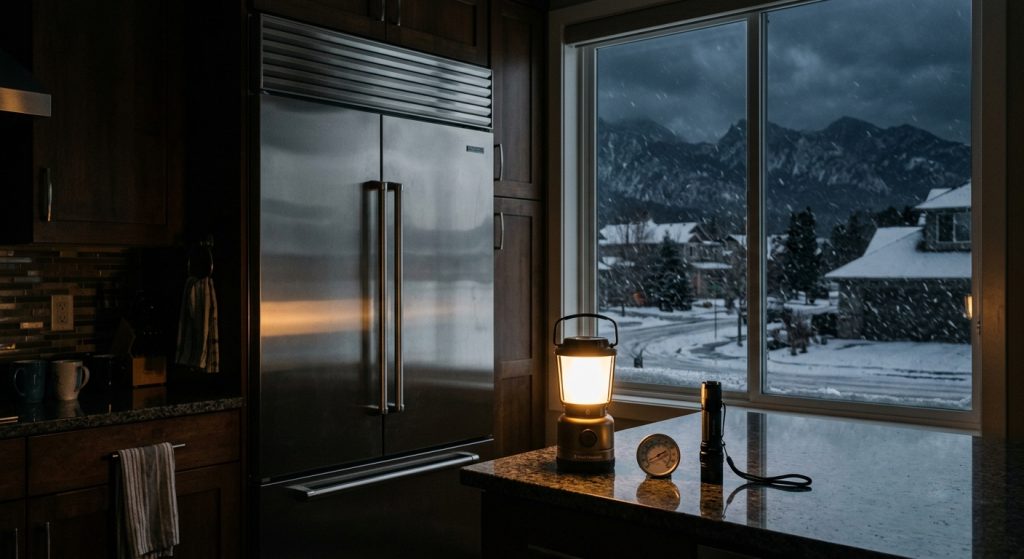
Refrigerators typically keep food safe for four hours during a power outage, while full freezers can last up to 48 hours. Keeping doors closed is essential to maintain temperatures. Perishable items should be discarded if they remain above 40 degrees for more than two hours to prevent illness.
Factors like appliance seals and room temperature influence how long cold air lasts. Homeowners can prepare with ice packs or install a professionally wired generator for reliable backup. Proper installation and local permits are required to ensure safety and prevent electrical hazards like backfeeding into the grid.
How Long Does a Fridge Stay Cold During a Power Outage?
It’s a scenario we’re all familiar with here in Southwest Denver and along the Front Range. The lights flicker and then go out completely. Whether it’s a sudden summer thunderstorm rolling over Harvey Park, a heavy winter snowstorm burying the foothills, or an unexpected Xcel Energy grid issue, a power outage brings immediate concerns.
One of the first questions that likely pops into your head as the house goes dark is about the food sitting in your kitchen. We understand that worry completely. Your groceries represent a significant financial investment, and ensuring your family’s health and safety is paramount. So, let’s address the big question: exactly how long does a fridge stay cold with no power?
The answer provides a small, critical window of opportunity to act. Knowing the timeline is the first step in effective blackout preparation. At Ponderosa Heating, Air, Plumbing, Electrical, we provide complete home services to our neighbors, and we want to equip you with the knowledge to navigate these situations safely. We’ve seen firsthand how a little preparation can make a world of difference when our community faces an outage.
The Four-Hour Rule for Refrigerators
The general rule of thumb, backed by national food safety experts, is that a modern refrigerator will keep its contents safely chilled for about four hours if the door remains completely closed.
The absolute key to maximizing this time is to resist the urge to open the door to “check” on things. Every single time you open it, you let the precious cold air escape and allow warmer ambient air to rush in, drastically accelerating the temperature rise inside the appliance.
The goal is to keep the internal refrigerator temperature during a blackout below 40°F for as long as possible. Once the temperature inside rises above 40°F and stays there for two hours or more, perishable foods enter the “danger zone,” a climate where harmful bacteria multiply rapidly.
What About Your Freezer?
Your freezer offers a much longer grace period, which is fantastic news for your frozen meats and bulk goods.
A freezer that is only half full will typically keep its contents safely frozen for about 24 hours. If your freezer is packed completely full, it can maintain its sub-freezing temperature for up to 48 hours. The densely packed frozen items essentially act as one large, collective ice block, helping to keep each other cold. Just like with the refrigerator, it is absolutely critical to keep the freezer door shut tight to preserve the thermal mass.
Factors That Influence Your Appliance
While four hours is the standard guideline for a refrigerator, several variables can affect this timeline. Understanding these factors can help you better gauge your specific situation and utilize our best Denver power outage tips effectively.
- Appliance Seal: The rubber gasket around your refrigerator door is crucial. If it’s cracked, brittle, or not sealing tightly, cold air will escape much faster.
- Ambient Room Temperature: A power outage during a 95-degree July afternoon in Southwest Denver will cause your fridge to warm up much faster than an outage during a freezing January evening.
- Amount of Food: As mentioned, a full fridge stays colder longer. The physical mass of the chilled food helps to stabilize the internal temperature. If you know a severe storm is coming, it’s a smart move to fill empty space with jugs of water.
- Initial Temperature: A refrigerator that was running at a proper, perfectly calibrated temperature (ideally 37°F) before the outage has a much better starting point than an old unit that was already struggling to stay below 40°F.
Critical Power Outage Food Safety Guidelines
Knowing the timeline is only half the battle; the other half is understanding strict power outage food safety. Protecting your family from foodborne illness is the ultimate priority. The financial loss of spoiled groceries is frustrating, but the health risks are far more severe. We always advise our clients to follow the golden rule of kitchens: “When in doubt, throw it out.” It’s simply not worth the risk.
According to the U.S. Food and Drug Administration (FDA), bacteria can grow rapidly on perishable food between 40°F and 140°F. We strongly recommend keeping a cheap appliance thermometer inside both your fridge and freezer at all times. This removes the guesswork.
Once the power is restored, assess the situation carefully:
- Check the Thermometer: If the power was out for more than four hours, check the thermometer immediately. If it reads 40°F or below, the food is likely safe.
- Assess the Freezer: Check for ice crystals on the food. If food still contains ice crystals or feels refrigerator-cold, it can be safely refrozen or cooked.
- Never Taste to Test: You cannot rely on appearance or odor to determine if a food is safe. Discard any perishable food (meat, poultry, fish, eggs, and leftovers) that has sat above 40°F for two hours or more.
Practical Tips for Blackout Preparation
Beyond keeping the doors shut, proper blackout preparation can bridge the gap until the electricity is restored. Before a forecasted storm hits, freeze containers of water or reusable gel packs to take up empty space in your freezer. When the power goes out, you can migrate some of these frozen packs down to the refrigerator to artificially extend the chill.
If you anticipate a multi-day outage, having heavy-duty coolers on hand is a great idea. You can purchase block ice or dry ice to stock the coolers and transfer your most critical refrigerated items, creating a temporary, safe storage solution in your garage or basement.
The Ultimate Solution: A Whole-Home Generator
While ice packs and coolers are helpful for short-term outages, homeowners in Denver occasionally face extended grid failures. For true security, the ultimate solution is a permanent whole-home generator. This isn’t just about saving your groceries; it’s about maintaining your entire way of life and ensuring your home remains a safe, warm sanctuary regardless of what the weather is doing outside.
At Ponderosa, we specialize in whole house generators in Denver. Unlike a small, noisy portable generator that you have to drag out of the shed and manually fuel with gasoline, a standby system is permanently wired directly into your home’s main electrical panel.
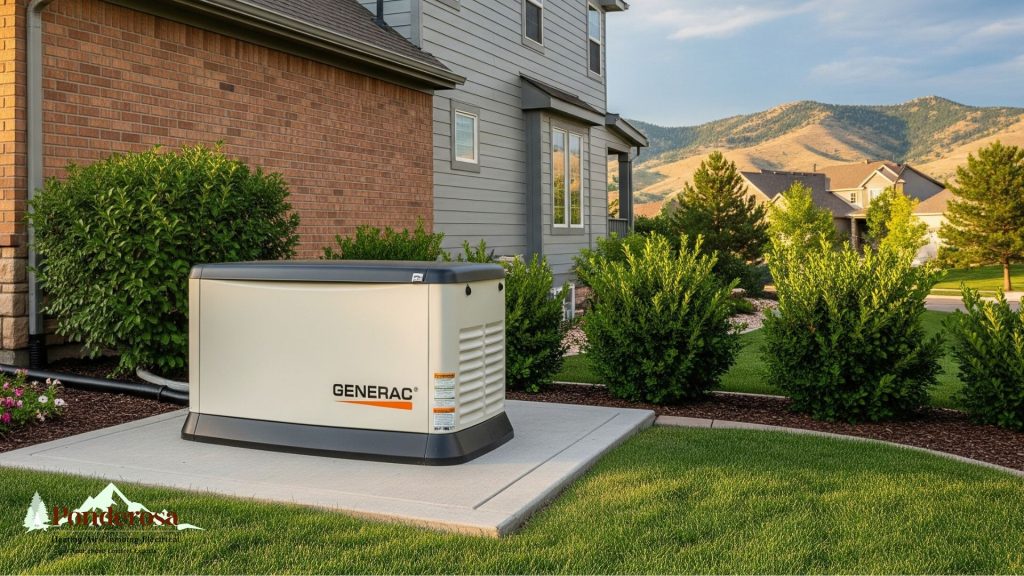
It detects a power outage automatically and kicks on within seconds. You might not even realize the grid failed until you look out the window and see your neighbor’s dark house. Reading through the 10 benefits of whole-house backup generators in Denver illustrates why this is the gold standard for home protection. Your refrigerator stays cold, your furnace keeps running, and your medical equipment stays online.
The Dangers of DIY Generator Hookups (The “Backfeeding” Risk)
With the rise of internet tutorials, many homeowners attempt to buy a portable generator and illegally wire it directly into their home’s breaker box or dryer outlet using a “suicide cord” (a cord with two male ends). This is incredibly illegal and lethally dangerous.
When you connect a generator to your home without a professionally installed “Transfer Switch,” the power you generate flows backward out of your house and into the municipal power grid. This is called “backfeeding.” When an Xcel Energy lineman is working on a downed power pole down the street, expecting the line to be dead, the electricity backfeeding from your DIY generator can electrocute and kill them instantly.
Furthermore, attempting to modify your own panel to accommodate a generator can cause a massive short circuit. If you are ever questioning the safety of your current setup, it is vital to have a professional evaluate if your electrical panel is a fire risk.
Local Denver Permitting for Standby Generators
Installing a permanent standby generator is a major structural modification that bridges two highly regulated trades: electrical and plumbing (gas lines).
In the City and County of Denver, installing a whole-home generator legally requires an electrical permit, a mechanical gas line permit, and a formal municipal inspection. The city must verify that the heavy-duty transfer switch is isolating your home from the grid safely and that the natural gas lines feeding the generator are perfectly sealed and sized correctly.
Because Ponderosa operates as a complete home services company, we have licensed electricians and plumbers on staff. We handle the complex local permitting process, the natural gas plumbing, the electrical integrations, and the final municipal inspections for you. We ensure your system is 100% legal, up to code, and ready to protect your family safely.
Frequently Asked Questions
Can I keep my fridge cold by putting it outside in the winter?
We do not recommend this. While the outdoor air in Colorado might be freezing, the sun can quickly heat up the metal casing of the refrigerator, turning it into an oven. Furthermore, placing food outside exposes it to local wildlife and fluctuating temperatures that are impossible to control safely.
Will a whole-home generator run my entire house?
It depends on the size of the unit you choose. We can install a massive unit that powers every single circuit in your home simultaneously, or we can install a smaller, more cost-effective unit wired only to a sub-panel that powers your “critical loads” (like the kitchen fridge, the furnace blower, and a few key lighting circuits).
Do standby generators require maintenance?
Yes. Just like the engine in your car, a generator has spark plugs, oil, and air filters that need to be changed regularly. We offer comprehensive maintenance plans to ensure your generator’s engine is perfectly tuned and ready to perform the moment an emergency strikes.
Get Your Free Quote for Uninterrupted Power
Don’t wait for the next severe storm to leave you in the dark, frantically wondering how long your fridge will stay cold. Take control of your home’s security and your family’s comfort today. We invite you to experience the Ponderosa difference, where clear communication, quality craftsmanship, and your peace of mind are our top priorities.
Our initial service call fee is $189, but this is completely waived (making your quote free) if you choose us for the work.
Ready to ensure you’re never left without power again? Call our team today at 720-470-1133 or fill out our simple online contact form to schedule your free generator consultation. Let us provide the ultimate solution for your home’s blackout preparation.
