
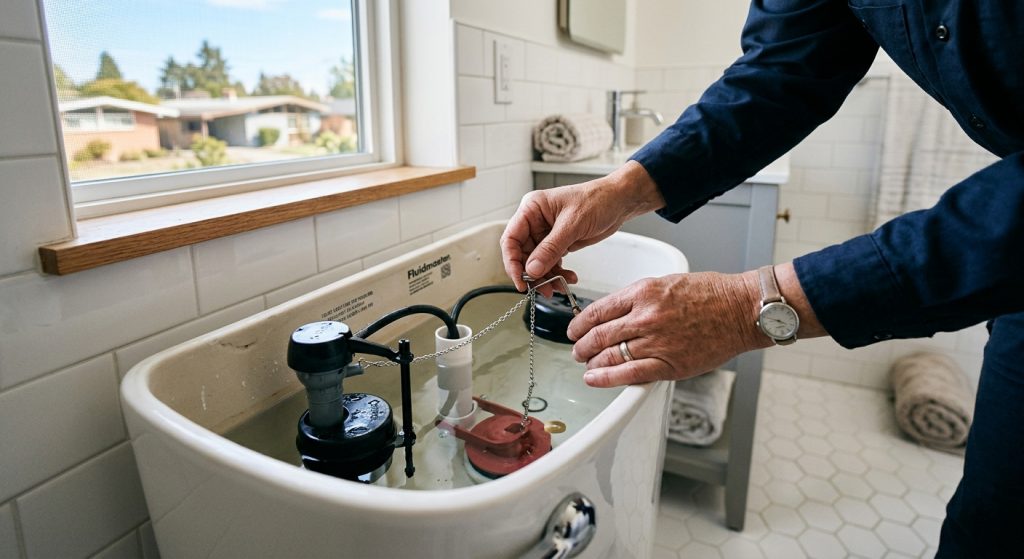
A running toilet can waste hundreds of gallons of water daily and increase utility bills. Common causes include a tangled flapper chain, a worn rubber flapper, or an incorrectly adjusted float height. While basic troubleshooting is possible, older plumbing infrastructure in Southwest Denver often presents unique challenges for homeowners.
Professional intervention is recommended for complex issues like stuck shut-off valves or leaks at the base. Attempting advanced DIY repairs can lead to cracked porcelain or significant water damage. Replacing outdated fixtures with modern, high-efficiency models helps conserve water and ensures long-term reliability for residential plumbing systems.
How to Fix a Running Toilet in Southwest Denver (And When to Call Us)
If you live in Southwest Denver, you know our neighborhoods have a unique, vibrant energy. Whether you are spending a Saturday afternoon enjoying live music at the Levitt Pavilion in Ruby Hill, supporting the urban agriculture initiatives near the Re:Vision hub in Westwood, or just enjoying the mid-century charm of Harvey Park, this side of town is a fantastic place to call home. But no matter how much you love your home, there is one sound that can instantly ruin a peaceful evening: the constant, hissing sound of a running toilet.
A running toilet might seem like a minor annoyance, but it is actually a significant problem. It is the plumbing equivalent of leaving your car idling in the driveway all night. It wastes an astonishing amount of water, drives up your utility bills, and puts unnecessary wear and tear on your home’s internal plumbing components.
At Ponderosa Heating, Air, Plumbing, Electrical, we help our neighbors in Southwest Denver resolve complete home service issues every single day. While many homeowners are handy enough to tackle basic troubleshooting, the older plumbing infrastructure mixed with the residential/industrial zoning in our area can sometimes make a simple fix much more complicated.
Here is a comprehensive guide to understanding why your toilet won’t stop running, how you can perform a basic check yourself, why DIY repairs often fail, and exactly when you need to call a local pro for a lasting solution.
Why Do Toilets Run? The Anatomy of the Tank
To understand how to fix the problem, you first need to understand what is happening inside the porcelain tank sitting against your bathroom wall. When you push the handle, a chain lifts a rubber stopper (the flapper), allowing the water in the tank to rush down into the bowl. Once the tank empties, the flapper drops back down to seal the hole. A fill valve then turns on, refilling the tank until a float mechanism rises to a specific height, shutting the water off.
When a toilet runs constantly, it means this cycle is failing to close completely. Water is either continuously leaking down into the bowl, or the fill valve is continuously pumping water into the overflow tube.
The Helpful “How-To”: 3 DIY Checks You Can Try
Before you start searching for a running toilet repair denver expert, there are three basic things you can check yourself. Simply remove the heavy lid from your toilet tank (place it carefully on a towel so it doesn’t crack your tile floor) and look inside:
1. Check the Flapper Chain
Sometimes the easiest fix is right on the surface. The chain connecting the flush handle to the rubber flapper can get tangled or caught under the flapper itself. If the chain is too short, the flapper can’t close. If it is too long, it can get sucked into the drain hole. Adjust the chain so there is only about half an inch of slack.
2. Inspect the Rubber Flapper
The flapper is the most common culprit behind a running toilet. Over time, the chemicals in our municipal water supply can cause this rubber piece to warp, crack, or degrade. If the flapper doesn’t create a perfect, watertight seal, water will continuously seep into the bowl. You can run your finger along the bottom of the flapper; if black residue rubs off on your hands or if it feels stiff and brittle, it needs to be replaced.
3. Adjust the Float Height
If the water level in the tank is set too high, water will constantly spill over the top of the vertical overflow tube, causing the fill valve to run non-stop. Check the water level—it should sit about an inch below the top of the overflow tube. Depending on your fill valve model, you can usually adjust this by turning a small screw or sliding a clip on the float arm to lower the water level.
The Local Impact: Water Conservation in Denver
Letting a toilet run isn’t just bad for your wallet; it is incredibly bad for our local environment. Colorado relies heavily on snowpack and careful water management. According to the Environmental Protection Agency’s WaterSense program, a single continuously running toilet can waste up to 200 gallons of water per day. That is roughly the same amount of water used to take five long showers—every single day—straight down the drain.
Furthermore, Denver Water emphasizes that upgrading or promptly repairing old, inefficient plumbing fixtures is one of the most impactful ways local residents can help protect our region’s water supply. If you are dealing with a toilet from the 1980s or 1990s, it might be time to stop applying band-aids and start looking into a high-efficiency replacement.
Why DIY Fails (And The Hidden Dangers in Older Homes)
If adjusting the chain or swapping a flapper doesn’t solve the issue, many homeowners turn to internet tutorials to try and rebuild the entire inside of the tank. While we love the independent spirit of our neighbors, DIY plumbing in Southwest Denver comes with significant risks.
Here is why DIY fails and why a local pro is safer:
The Shut-Off Valve Trap
To replace the major components inside your toilet tank, you have to turn off the water supply to the toilet using the small valve located behind the bowl, near the floor. In older neighborhoods like Harvey Park or Athmar Park, these valves may not have been turned in a decade or more. The internal rubber washers calcify and the metal corrodes.
When a DIY homeowner forces a stuck, corroded shut-off valve, the valve can literally snap off in their hand. Suddenly, you don’t just have a running toilet; you have a geyser of pressurized water flooding your bathroom floor. By the time you run to the basement or the street to shut off the main water supply to the whole house, the water damage to your floors and drywall can be catastrophic.
Cracked Porcelain
To replace a fill valve or a flush valve, you often have to unbolt the tank from the bowl. Porcelain is incredibly strong, but it is also brittle. If you overtighten a metal bolt against a porcelain tank by even a fraction of an inch, the entire tank can crack in half. What started as a cheap DIY repair instantly turns into the need for a complete toilet replacement.
The Industrial/Residential Mix
Southwest Denver is unique because it blends dense residential areas with heavy industrial corridors. This dynamic can occasionally lead to inconsistent municipal water pressure. If your home is experiencing water pressure that is too high, it will continually blow out the seals on your toilet’s fill valve. A DIY homeowner will replace the valve over and over, not realizing that the root cause is a failing Pressure Reducing Valve (PRV) on their main water line. You need a highly trained local expert who knows how to diagnose the whole system, not just the symptom.
When to Call Us: Finding a Plumber to Fix Your Toilet
You should never have to feel stressed about the plumbing in your own home. If you have tried the basic flapper and chain adjustments and the toilet is still hissing, or if you notice any of the following signs, it is time to call a professional plumber to fix toilet issues immediately:
- The Shut-Off Valve is Stuck: If you cannot easily turn the water off behind the toilet by hand, do not force it with a wrench. Let us safely replace the valve.
- Water Pooling at the Base: If you see water pooling around the bottom of the toilet where it meets the floor, the wax ring has failed. This means wastewater is leaking into your subfloor, which can cause severe structural rot and mold.
- Constant Phantom Flushing: If the toilet flushes itself every 10 or 15 minutes, there is a deep internal leak that requires a professional tank rebuild.
When you call us, you don’t have to worry about contractors stuck in traffic on Federal Blvd or navigating the high-speed congestion on Alameda. We are local, we know these neighborhoods, and our dispatched trucks carry the exact parts needed to fix the plumbing in Southwest Denver homes efficiently.
Upgrading: Is it Time for a Toilet Replacement Near Me?
Sometimes, a repair simply doesn’t make financial sense. If the porcelain is hairline cracked, if the internal components are completely calcified with hard water deposits, or if the toilet requires three flushes just to clear the bowl, you are throwing money away.
If you find yourself frequently searching for a toilet replacement near me, our team can help. We can walk you through upgrading to a modern, high-efficiency, low-flow toilet that provides a powerful, reliable flush while drastically cutting down on your monthly Denver Water bill. Modern toilets are more comfortable, easier to clean, and feature advanced flushing technology that older models simply cannot match.
While we are evaluating your bathroom plumbing, our comprehensive home experts can also take a look at your home’s other critical systems, answering questions like “Does my water heater need repaired?” to ensure you have a reliable supply of hot water all winter long.
FAQ: Southwest Denver Plumbing & Toilets
Is it dangerous to leave a toilet running?
While a running toilet isn’t a direct fire hazard or immediate structural threat (unless water is actively leaking onto the floor), it is financially dangerous. A severe leak can add hundreds of dollars to your monthly utility bill if left unchecked.
Should I repair or replace my 20-year-old toilet?
If the toilet uses 3.5 gallons or more per flush (usually stamped behind the seat), we highly recommend replacement. Modern toilets use 1.28 gallons or less and provide a superior flush. The water savings alone will help the new unit pay for itself over time.
Can I buy my own toilet and have you install it?
We generally recommend letting us source the equipment. When we supply the toilet, we can ensure it is a high-quality, professional-grade fixture (not a builder-grade unit from a big box store) and back it entirely with our ironclad satisfaction guarantee.
Let Ponderosa Protect Your Plumbing
You have better things to do in Southwest Denver than jiggle a toilet handle every time you use the bathroom. Whether you need a precision repair to stop a leak, a safe valve replacement, or a beautiful new high-efficiency toilet installed, our team of friendly, local experts is here to help. We provide honest advice, transparent pricing, and neighborly service that you can trust to fix your problems the right way.
Our initial service call fee is $189, but this is completely waived (making your quote free) if you choose us for the work.
Call us today at 720-470-1133 or fill out our online contact form to schedule your plumbing service. Let’s make sure your home’s plumbing is reliable, efficient, and worry-free.
