
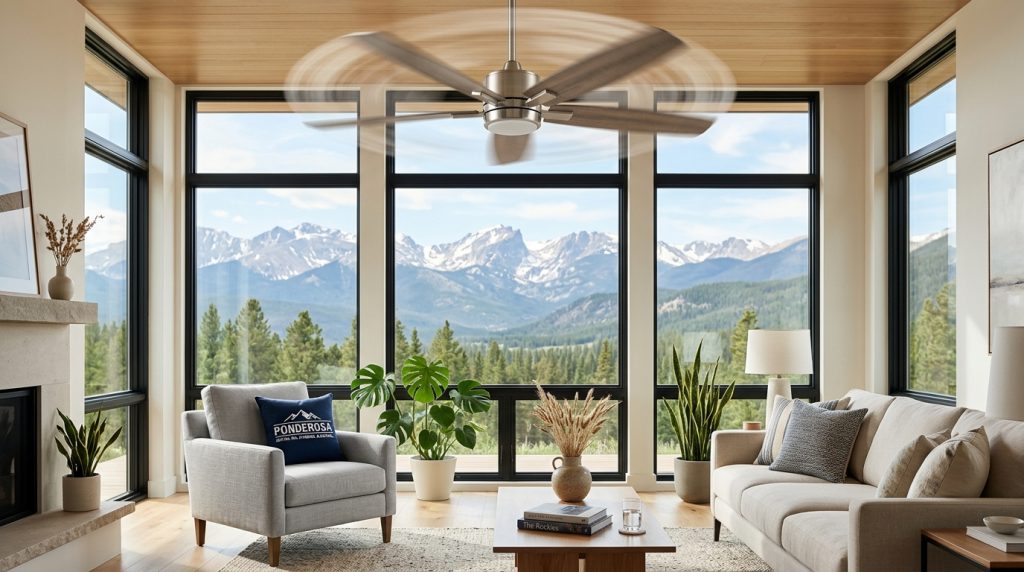
During summer, ceiling fans should rotate counter-clockwise to create a cooling downdraft. This wind-chill effect helps moisture evaporate from the skin, allowing residents to stay comfortable while setting thermostats higher. Using the correct fan direction can reduce energy costs and minimize wear on air conditioning systems.
To switch fan directions, users should toggle the motor switch or use a remote while the blades are stationary. Regular maintenance, such as dusting blades and tightening screws, prevents wobbling and noise. Fans only cool people through airflow, so turning them off in empty rooms maximizes efficiency.
When the summer sun starts beating down on neighborhoods like Westwood, Harvey Park, or Ruby Hill, the heat inside our homes can quickly become stifling. While most of us rely on our air conditioning to do the heavy lifting, your ceiling fan is a powerful, cost-effective tool to help keep you comfortable without skyrocketing your electric bill.
However, many of our neighbors do not realize that the direction your fan spins makes a massive difference in how it feels. If your fan is spinning the wrong way, you might actually be trapping hot air right where you are sitting, making your room feel warmer than it actually is. At Ponderosa Heating, Air, Plumbing, Electrical, we want to help you get the most out of your home’s systems. Here is everything you need to know about ceiling fan direction, summer Colorado settings and how to optimize your airflow.
The Short Answer: Counter-Clockwise for a Cooling Breeze
For the summer months, your ceiling fan should spin counter-clockwise.
When the blades spin in this direction, the specific angle of the blades (known as the blade pitch) creates a ceiling fan downdraft. This pushes a direct, concentrated column of air straight down toward the floor. This “wind-chill effect” is the secret to staying comfortable. It is important to remember that a fan does not actually lower the temperature of the room—it is not an air conditioner—but it helps the moisture on your skin evaporate faster.
In our uniquely dry Colorado climate, this evaporation happens very quickly, which makes you feel significantly cooler. In fact, cooling with a ceiling fan in Denver homeowners can often raise their thermostat by about 4 degrees without feeling any less comfortable. This simple switch can lead to a noticeable reduction in your monthly cooling costs.
Pro Tip
To verify your fan is in the right mode, turn it on high and stand directly under the blades. You should feel a localized breeze hitting your face and shoulders immediately. If you feel the air moving around the edges of the room but not directly under the fan, your blades are likely spinning in “winter mode,” pulling air up instead of pushing it down.
How to Set Your Ceiling Fan Summer Mode
Most modern ceiling fans have a small toggle switch located on the motor housing, just below the blades. If you live in an older home in Athmar Park or Westwood, you might have an older model that requires a bit more investigation.
- Turn off the fan: Safety first—never attempt to flip the direction switch while the blades are moving. Wait for them to come to a complete stop.
- Find the switch: It is usually a small black or silver slider on the side of the motor. On some older models, you may need to remove a decorative light cover to find it.
- Toggle the switch: Flip it to the opposite position. On most fans, “down” is for summer (counter-clockwise) and “up” is for winter (clockwise).
- Test the airflow: Turn the fan back on and stand underneath it to confirm you feel that refreshing downdraft.
If you have a fan with a remote control, there is often a dedicated “direction” or “seasonal” button. For those with high vaulted ceilings—common in some of the newer builds near Mesa Meadows or Applewood—you may need a sturdy ladder or a specialized fan pole to reach the manual switch safely.
Pro Tip
While you are up there reaching for the switch, take 30 seconds to wipe the dust off the top of the blades with a damp microfiber cloth. In our dry, dusty air, grime can build up on the leading edge of the blades. This buildup creates drag, which can off-balance your fan and lead to that annoying “wobbling” sound or clicking noise.
Ceiling Fan Settings: Summer vs. Winter
It might seem counterintuitive to use a fan in the winter, but it is just as helpful then as it is now. Understanding the difference helps you stay comfortable year-round:
| Feature | Summer Mode | Winter Mode |
| Blade Direction | Counter-Clockwise | Clockwise |
| Airflow Pattern | Downdraft (Pushes air down) | Updraft (Pulls air up) |
| Main Goal | Create a cooling wind-chill | Circulate trapped heat from the ceiling |
| Fan Speed | Medium to High | Low |
| Thermostat Impact | Allows for higher AC settings | Helps the furnace run less often |
Why “Summer Mode” Helps You Save Energy and Protect Your AC
We all know that cooling a home during a Denver heatwave can put a strain on your wallet. One of the best ways to save energy is by relying on the wind-chill effect to stay comfortable while giving your AC compressor a much-needed break.
When your fan is spinning correctly, your air conditioner does not have to work as hard to maintain your comfort level. This does not just save you money on your next bill; it also reduces the wear and tear on your cooling system, potentially extending its lifespan and preventing an expensive mid-summer breakdown.
However, remember the golden rule of fans: Fans cool people, not rooms. If you leave a ceiling fan running in an empty bedroom while you are at work, you are simply wasting electricity. The fan does nothing to lower the actual mercury on the thermometer; it only works when someone is there to feel the air moving across their skin.
Pro Tip
When you leave a room, turn the fan off. It is a simple “local neighbor” habit that can save you a noticeable amount on your monthly utility bills over the course of a long, hot Colorado summer.
Troubleshooting: Why is My Fan Wobbling or Making Noise?
If you flip your fan into summer mode and suddenly hear a rhythmic “click-click-click” or notice the fan swaying dangerously, do not ignore it. This usually happens for three reasons:
- Loose Screws: The vibrations of the motor can loosen the screws holding the blades to the “irons” (the brackets). Check and tighten these regularly.
- Dust Imbalance: As mentioned before, even a small amount of dust on one blade can throw the whole system out of alignment.
- Warped Blades: In our fluctuating Colorado humidity, wooden fan blades can sometimes warp over time, causing them to catch the air unevenly.
If your fan continues to wobble after cleaning and tightening, it might be a sign of a faulty motor or an improperly anchored ceiling box. This is a safety issue, as a falling fan can cause significant damage or injury.
Ceiling Fan FAQ: Common Questions from the Neighborhood
To help our neighbors stay cool, here are the most frequent questions we hear regarding ceiling fans:
Can I leave my ceiling fan on all night?
Yes, it is perfectly safe to run a ceiling fan while you sleep. In fact, many people find the “white noise” and steady breeze help them sleep better during warm Denver nights. Just ensure the fan is properly balanced to avoid any annoying clicking sounds that might wake you up.
Does the number of blades matter for cooling?
Generally, fans with fewer blades (3 or 4) can move more air and move it faster, which creates a stronger wind-chill. Fans with 5 or more blades tend to be quieter and provide a softer, more consistent airflow. For most SW Denver homes, a 5-blade fan is the perfect balance of comfort and quiet.
What if my fan doesn’t have a direction switch?
Some older or specialized fans are “single-direction” only. If you stand under it and do not feel a breeze on high, and there is no switch to be found, the fan may have been installed with the blades upside down, or it simply is not designed for seasonal switching.
When the Fan Isn’t Enough: Signs You Need Professional Help
While knowing which way should fan spin in summer is a great first step, sometimes a fan simply cannot keep up with an aging or broken cooling system. If you find that your home is still uncomfortably warm even with the fans on high and the AC running constantly, it might be time for a professional check-up.
If you are experiencing any of the following, your fan is not the problem:
- Warm air coming from your supply vents.
- Frequent “short-cycling” where the AC turns on and off every few minutes.
- Odd noises (banging, squealing, or grinding) coming from your outdoor condenser unit.
- A sudden, unexplained spike in your energy bills compared to last summer.
If you are dealing with these issues, you likely need professional air conditioning repair in southwest Denver to get your home back to a safe and comfortable temperature.
Let Ponderosa Help You Protect Your Home
Whether you need help with an off-balance ceiling fan, a faulty light switch, or a complete AC overhaul, our team of neighborly experts is here to help. We pride ourselves on providing plain-English solutions without the technical jargon or high-pressure sales tactics. We treat your home with the same respect we’d show our own neighbors.
Our initial service call fee is $189, but this is completely waived (making your quote free) if you choose us for the work.
Call us today at 720-470-1133 or fill out our online form to schedule your service. Let’s make sure your home stays a cool, safe sanctuary all summer long.
Ponderosa Heating, Air, Plumbing, Electrical
Golden Office: 15750 S Golden Rd #J, Golden, CO 80401
Conifer Office: 26267 Conifer Rd Unit 209, Aspen Park, CO 80433
Phone: 720-470-1133
