
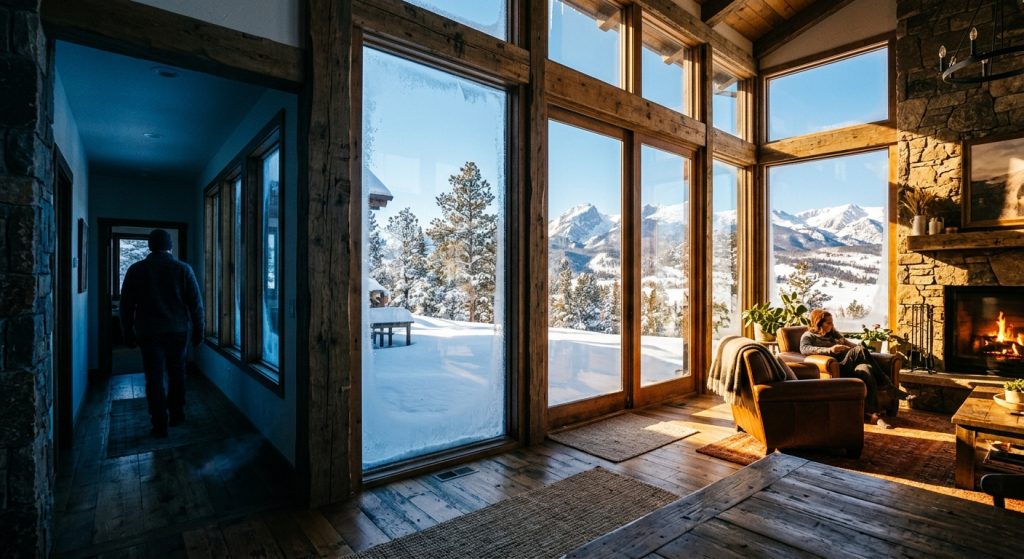
High-altitude homes in mountain communities face unique heating challenges due to low air density and extreme environments. Factors like leaky ductwork, wildlife damage, and intense solar heat gain often cause uneven temperatures. Standard HVAC calculations frequently fail to account for the physical behavior of thin air at high elevations.
Professional diagnostics and specialized repairs are essential for restoring balanced airflow and system efficiency. Expert technicians use advanced tools to ensure code compliance and permanent solutions that DIY methods lack. Proper maintenance and high-altitude furnace sizing are critical for maintaining a comfortable and safe indoor environment during winter.
Hot and Cold Spots in Your Conifer Home? Let’s Talk Air Flow
Living up here in Conifer, Aspen Park, and the surrounding mountain communities means embracing extreme environments. We love the rugged beauty of Staunton State Park and the quiet snowfall over Kings Valley, but mountain living certainly tests our homes. After a long day of navigating the winter chain laws and heavy traffic on US 285, all you want to do is come home to a warm, comfortable sanctuary.
But what happens when your sanctuary is completely unpredictable? If you find yourself peeling off layers of clothing in a boiling hot living room, only to put on a heavy sweater and wool socks the moment you step into a freezing master bedroom, you are dealing with a severe airflow problem.
At Ponderosa Heating, Air, Plumbing, Electrical, we specialize exclusively in high-altitude heating and cooling for our mountain neighbors. We know that standard “flatland” HVAC rules simply do not apply when you live at 8,200 feet above sea level. Uneven heating is one of the most common complaints we receive during the long Colorado winters.
Here is an in-depth, technical guide to understanding why your mountain home suffers from hot and cold spots, how to effectively improve hvac airflow, why DIY repairs usually fail, and how professional duct repair mountain area services can restore total comfort to your home.
The Physics of High-Altitude Airflow
To fix uneven heating conifer homes experience, we first have to talk about the air itself. The air in the foothills and mountains is significantly less dense than the air at sea level. Because there is less atmospheric pressure, there are fewer air molecules inside your ductwork.
Your furnace relies on a blower motor to push heated air through a maze of sheet metal or flexible tubing to reach the various rooms in your house. Because mountain air is “thinner,” it has less physical mass to carry thermal energy (heat). Furthermore, standard blower motors designed for city homes often struggle to move this thin air efficiently over long distances.
If your home’s ductwork was poorly designed, or if the contractor who built your house in Evergreen Meadows used a standard sea-level calculation for the HVAC system, the thin air simply loses its momentum before it reaches the furthest rooms in the house. This results in the rooms closest to the furnace getting blasted with heat, while the rooms at the end of the line are left freezing cold.
The Top Causes of Hot and Cold Spots in Mountain Homes
While the altitude sets the stage, there are several specific, physical problems within your home that restrict airflow and create these frustrating temperature zones.
1. Leaky and Damaged Ductwork (The Wildlife Factor)
In the mountains, our ductwork is often run through unconditioned spaces like crawlspaces or cold attics. This presents a massive vulnerability. According to the Department of Energy (DOE), a typical home loses 20% to 30% of the air moving through its duct system due to leaks, holes, and poorly connected joints.
Up here, we have an additional challenge: wildlife. As the temperature drops, mice, squirrels, and even raccoons seek warmth. They frequently find their way into mountain crawlspaces and tear away the soft outer insulation of flexible ductwork to build their nests. A single hole chewed into a main supply trunk will dump all of your expensive, heated air directly into the dirt crawlspace, leaving the bedroom above it freezing cold.
2. Closed or Blocked Vents
Many homeowners mistakenly believe that closing the vents in unused guest rooms will “force” more heat into the main living areas and save money. This is a myth that actually causes severe damage to your system.
Modern heating systems are designed to operate under a specific, balanced “static pressure.” When you close supply vents, you increase the pressure inside the ductwork. This chokes the blower motor, causing it to overheat and fail prematurely. It also throws off the entire airflow balance of the house, ironically making the hot and cold spots much worse. We also frequently find large couches, heavy area rugs, or long curtains accidentally blocking return and supply registers.
3. Intense Solar Heat Gain
Mountain homes often feature massive, beautiful south or west-facing windows to capture the views and the winter sun. Because the atmosphere is thinner at high elevations, the solar radiation hitting your home is intense. On a clear January afternoon, your south-facing living room might heat up to 75 degrees purely from the sun, causing your thermostat (which is usually located in the center of the house) to shut the furnace off. Meanwhile, the north-facing bedrooms that sit in the deep shade of the ponderosa pines are left plummeting into the 50s.
4. An Undersized or Failing Furnace
If your furnace is nearing the end of its lifespan or was improperly sized for the elevation of your home, it simply will not have the power to push air through the entire house. A failing blower motor will struggle to overcome the friction inside the ductwork. If this is the case, investing in a high-efficiency furnace replacement designed specifically for high altitude is the only permanent solution.
Why DIY Duct Repair Fails (And Why a Pro is Safer)
When neighbors realize their ductwork is leaking, the first instinct is often to head to the hardware store for a roll of duct tape. However, DIY duct repair in the mountains is largely ineffective and can even be dangerous.
Here is exactly why DIY fails and why relying on a local professional is safer:
Duct Tape Does Not Work on Ducts
Despite its name, standard cloth-backed duct tape is terrible for sealing HVAC ducts. The constant expansion and contraction of the metal ducts as they heat up and cool down, combined with the ultra-dry mountain air, causes standard tape to dry out, lose its adhesive, and fall off within a matter of months. Professional technicians use specialized UL-listed metallic foil tapes and heavy-duty mastic sealant—a thick, gooey compound that hardens into a permanent, airtight cast around the joints.
The Dangers of the Crawlspace
Navigating a dark, tight mountain crawlspace is not a Saturday afternoon DIY project. Beyond the dirt and the cramped quarters, you risk encountering nesting wildlife, hazardous droppings, and exposed wiring. Furthermore, if you accidentally crush or kink a flexible duct while crawling over it, you will severely restrict the airflow to that side of the house.
Airflow Balancing Requires Science, Not Guesswork
You cannot fix uneven heating by simply guessing which vents to open or close. Professional HVAC technicians use advanced tools like anemometers to measure the exact velocity of the air coming out of your vents, and manometers to measure the static pressure inside the system. We use this data to install specialized dampers inside the ductwork, allowing us to permanently balance the system and force the right amount of air into every single room.
Local Permitting Nuances and High-Altitude Expertise
If fixing your uneven heating requires modifying your ductwork layout, replacing the furnace, or installing an advanced zone-control system, it is critical to work with a contractor who understands local mountain regulations.
Jefferson County has strict building codes regarding HVAC modifications to ensure your home is safe and energy-efficient. If you hire a “chuck-in-a-truck” who performs unpermitted work, you could face massive fines or severe hurdles when you eventually try to sell your mountain property.
At Ponderosa Heating, Air, Plumbing, Electrical, we handle all the red tape for you. Because we work up and down the US 285 corridor every day, we have strong relationships with the local building departments. If we need to pull a permit for a major heating repair or installation, we handle the entire process, including scheduling the final municipal safety inspections. We ensure your system is 100% legal, up to code, and optimized for 8,000+ feet.
Why Ponderosa is the Best Choice for Mountain Homes
When a blizzard is rolling over Conifer Mountain and the temperatures are dropping into the negatives, you don’t have time to wait for a contractor who is afraid to drive up from the city. You need a neighbor who is already here.
We understand the unique stress of mountain living. We know that a reliable, perfectly balanced heating system isn’t just about comfort; it is about protecting your home’s pipes from freezing and keeping your family safe. When you choose us to fix your airflow issues, you aren’t getting a temporary patch. You are getting a comprehensive diagnostic from technicians who are heavily trained in high-altitude physics. We back up our work with an ironclad satisfaction guarantee, ensuring you have total peace of mind all winter long.
FAQ: Uneven Heating and Airflow in Conifer
Why is my upstairs always hotter than my downstairs?
This is a combination of basic physics—heat naturally rises—and poor duct design. In many two-story mountain homes, the thermostat is located on the main floor. The furnace satisfies the main floor quickly and shuts off before the upstairs receives enough conditioned air. A professional can solve this by installing an automated zone-control system with multiple thermostats.
Can dirty air filters cause hot and cold spots?
Absolutely. The EPA clearly states that clogged air filters are the number one cause of HVAC airflow restriction. In Conifer, where we deal with dust from dirt roads and occasional wildfire smoke, your filter clogs much faster than a home in the city. A choked filter prevents the blower motor from pulling in enough air, starving the entire house of heat. You should check and replace your filter every 30 to 60 days.
Will a bigger furnace fix my cold spots?
No! This is a very common misconception. Installing an oversized furnace will actually make the problem worse. A furnace that is too large for your ductwork will “short cycle”—turning on, blasting the immediate area with heat, and shutting off rapidly. This damages the equipment and guarantees that the air will never reach the back bedrooms. Proper airflow is about balance, not just raw power.
Let Us Restore Total Comfort to Your Mountain Home
You shouldn’t have to wear a winter coat in your own living room or sleep with a space heater in your bedroom. If you are tired of battling hot and cold spots, let our team of local mountain experts diagnose your ductwork and completely revitalize your home’s airflow. We provide honest advice, clear explanations without the confusing industry jargon, and neighborly service you can trust to protect your home.
Our initial service call fee is $189, but this is completely waived (making your quote free) if you choose us for the work.
Call us today at 720-470-1133 or fill out our online contact form to schedule your airflow diagnostic. Let’s make sure your mountain home stays warm, balanced, and perfectly comfortable all winter long.
