
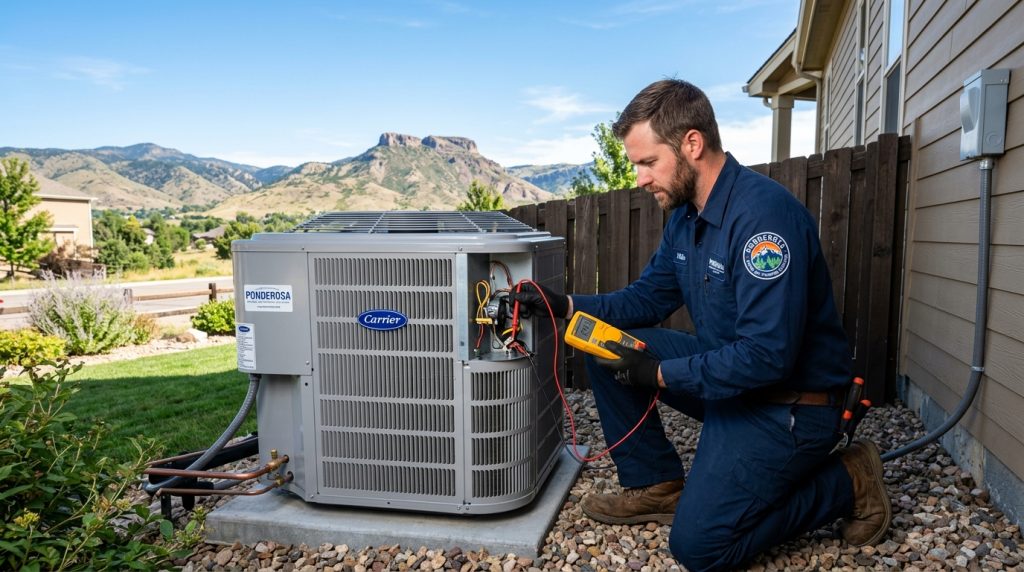
Air conditioning systems produce buzzing sounds due to various electrical or mechanical issues. Common causes include component failure, loose parts, and pressure imbalances. These noises typically signal that the unit is operating under extreme stress and require technical inspection to prevent system failure or safety hazards.
Ignoring these sounds can lead to fire risks, compressor damage, and increased energy costs. Regional environmental factors like high UV exposure and airborne debris can accelerate equipment wear. Professional diagnostics help identify whether issues stem from electrical arcing or mechanical vibrations before more serious damage occurs.
Why Is My AC Making a Buzzing Noise in Golden?
There is nothing quite like a summer evening in Golden, sitting out on the patio with a cold drink and watching the sun dip behind North Table Mountain. But that peaceful mountain atmosphere is quickly ruined if your outdoor cooling unit starts sounding like a swarm of angry bees.
If you notice your ac making buzzing noise during a hot July afternoon, it’s not just a nuisance—it’s a warning. While some sounds are a normal part of your system’s operation, a sharp buzz or a sudden air conditioner loud hum often indicates an electrical or mechanical failure that needs immediate attention. At Ponderosa Heating, Air, Plumbing, Electrical, we want to help our neighbors keep their homes quiet, safe, and comfortable. Here is a technical breakdown of why your AC might be making that noise and when it’s time to call for professional ac repair in Golden.
Understanding the Difference Between a Normal Hum and a Dangerous Buzz
Every air conditioner makes a certain amount of noise. You’ll typically hear the whir of the fan blades and a low, consistent hum from the compressor when the system is running at peak performance. This is the sound of a system doing its job. However, you should be concerned if the sound changes in pitch, becomes louder over time, or starts making a “rhythmic” or “aggressive” buzzing sound.
In the world of HVAC diagnostics, a “buzz” is often distinct from a “hum.” A hum is usually a mechanical vibration, while a buzz is frequently electrical in nature. Because the electricity in your Golden home operates at high voltages (typically 240 volts for an AC unit), any sound that suggests an electrical “arc” or a struggling component should be treated as a priority. In our dry Colorado air, electrical components are more prone to static buildup and “carbon tracking.” Ignoring a buzz can lead to a complete system failure right when you need cooling the most.
Pro Tip
Try to identify exactly where the sound is coming from. Is it coming from the outdoor condenser unit (the big box in the yard), or is it coming from the indoor air handler (usually in the basement or a utility closet)? Knowing the location helps our technicians diagnose the issue much faster when we arrive, potentially saving you money on diagnostic time.
5 Common Causes of an Air Conditioner Loud Hum or Buzz
If your system is struggling, there are a few usual suspects. Here are the most common reasons we find our neighbors calling for an ac making buzzing noise diagnostic:
1. Electrical Contactor Failure (The “Chatter”)
The contactor is a small, heavy-duty switch inside your outdoor unit that tells the system when to turn on and off based on the signal from your thermostat. Over time, the silver-plated contacts can become “pitted” or charred due to thousands of tiny electrical arcs every time the unit starts. When the contactor is struggling to make a solid connection, the electromagnetic coil inside can “chatter,” producing a constant, loud buzzing sound. If left alone, the contactor will eventually “weld” shut (leaving the AC running forever) or fail completely, leaving you without cooling.
2. Loose Parts and Mechanical Vibration
Your AC unit is full of moving parts spinning at high speeds. After years of operation, screws, brackets, and even the fan motor mounts can wiggle loose. If a metal panel or a refrigerant line is slightly loose, it can create a high-frequency buzz or rattle as the parts vibrate against each other. While this might seem minor, constant vibration can eventually lead to refrigerant leaks (by rubbing a hole in a copper line) or wire insulation damage. This is a common issue with a 15-year-old AC unit in Golden that has seen many seasons of Foothills temperature swings.
3. Failing Fan Motor Bearings
The outdoor fan motor is responsible for pulling heat away from your home’s refrigerant. If the bearings inside the motor start to fail or lose their lubrication, the fan may struggle to spin at the correct RPM, producing a loud, grinding buzz. You might also notice the fan blades spinning slower than usual or not at all. If the fan motor fails, the compressor will quickly overheat, which can lead to a much more expensive repair, like a compressor replacement.
4. Refrigerant Leaks and Pressure Imbalances
If a refrigerant line has a tiny “pinhole” leak, the escaping gas under high pressure can sometimes create a high-pitched buzzing, hissing, or whistling sound. Refrigerant is the lifeblood of your system, and a leak doesn’t just stop the cooling; it puts an immense strain on the compressor’s valves. If you notice a buzz accompanied by ice on your copper lines or flickering lights when the AC turns on, you likely have a pressure imbalance that requires a professional leak search.
5. A Failing Dual Run Capacitor
The capacitor is like a large battery that gives your motors the “kick” they need to start. If the capacitor is “leaking” its electrical charge or bulging at the top, you will hear a loud, rhythmic buzzing as the motor tries to start but lacks the torque to turn. This is often accompanied by the fan or compressor “stuttering” or making a “thump” sound without actually starting.
The Danger of Ignoring an AC Buzz
It can be tempting to ignore a sound if the air coming out of the vents is still relatively cool. However, a buzzing noise is usually the sound of a component working under extreme stress.
- Fire Risk: Many buzzing sounds are caused by loose electrical connections or arcing. In our dry Golden climate, an electrical spark can quickly lead to a fire inside the unit’s control box.
- Compressor Burnout: If a small part like a $100 capacitor fails and you keep trying to run the system, it puts massive strain on the $2,000 compressor. Fixing the buzz early saves the heart of your system.
- Efficiency Loss: A buzzing unit is an inefficient unit. It draws more amperage to overcome the mechanical or electrical resistance, which shows up directly on your monthly Xcel Energy bill.
Golden-Specific Cooling Challenges
Why does it seem like AC units in Golden face these issues so often? Our local environment plays a big role in equipment longevity.
- High-Altitude UV Exposure: At 5,675 feet, the UV rays are significantly more intense. This breaks down the plastic insulation on electrical wires and the “paint” on the outdoor cabinet faster than at sea level, leading to more “shorts” and rust-related vibrations.
- Cottonwood and Canyon Dust: The dust and cottonwood seeds that blow through Clear Creek canyon can quickly clog your condenser coils. When the coils are dirty, the internal pressures of the system skyrocket. This causes the compressor to work harder and the fan to spin at higher temperatures, leading to—you guessed it—more buzzing and humming.
- Air Density: Thinner air is less efficient at carrying away heat. This means our Golden AC units have to move more air volume to get the same cooling effect as a unit in a lower-elevation city, putting more wear on the fan motor bearings.
DIY Troubleshooting vs. Professional Repair
While we always recommend a professional for electrical issues, there are a few things you can check yourself to help us when we arrive:
| Feature | DIY Troubleshooting | Professional AC Repair in Golden |
| Visual Check | Look for debris/sticks in the fan | Deep internal component inspection |
| Filters | Change dirty air filters | Check refrigerant levels & pressures |
| Thermostat | Verify settings & batteries | Test electrical contactors & capacitors |
| Cleaning | Gently hose off the outdoor coils | Professional chemical coil cleaning |
| Safety | Turn off breaker if sound is loud | Licensed handling of high-voltage parts |
| Warranty | None | Work backed by Satisfaction Guarantee |
Pro Tip
If the buzzing is accompanied by a burning smell, turn the system off at the breaker immediately. This is a sign of a “dead short” that could lead to a home fire. According to the Electrical Safety Foundation International (ESFI), electrical malfunctions are a leading cause of home fires, and your AC is likely the largest electrical draw in your entire house.
The Ponderosa Difference: Our Neighbors Come First
When you call Ponderosa for an ac repair in Golden, you aren’t getting a “big city” technician who is in a rush to get to the next zip code. You are getting a neighborly expert who knows Golden’s specific housing and climate and cares about your home’s safety. Our diagnostic process for a buzzing AC includes:
- Full Electrical Audit: We test your contactors, capacitors, and wire connections to ensure everything is tight and arc-free.
- Mechanical Inspection: We check motor bearings and fan balance to eliminate vibration-related noises before they cause a leak.
- Refrigerant Check: We verify that your system has the correct charge and that no leaks are causing pressure “whistles” or buzzes.
- System Balancing: We make sure your unit is perfectly level (the ground shifts in the Foothills!) and that all cabinet screws are tightened to factory specs.
If we find that your unit is simply too far gone, we’ll explain your options for a modern, whisper-quiet system without any high-pressure sales tactics. We even offer flexible financing for Golden cooling upgrades to help you stay cool and quiet on your own terms.
Frequently Asked Questions About AC Noises
Is it safe to run my AC if it’s buzzing?
No. A buzz often indicates an electrical struggle or a failing bearing. Running the system can cause a “cascade failure” where a small, cheap part ruins an expensive motor or compressor.
Why does my AC buzz only when it starts?
This is often a sign of a “hard-starting” compressor or a failing capacitor. It’s the “warning shot” from your system. It’s better to fix this early before it leaves you without cooling on a 95-degree afternoon.
Can a dirty air filter cause a buzzing noise?
Indirectly, yes. A dirty filter restricts airflow, causing the indoor blower motor to vibrate and work harder. This can lead to electrical hums that resonate through your ductwork and sound like a buzz in the walls.
Let Ponderosa Fix the Buzz
Don’t let a noisy air conditioner ruin your Golden summer. Whether you have a minor vibration or a major electrical issue, our team of friendly experts is ready to provide the ac repair in Golden you need to restore the peace and quiet of your home.
Our initial service call fee is $189, but this is completely waived (making your quote free) if you choose us for the work. We believe in transparent pricing and neighborly service that treats you like family.
Call us today at 720-470-1133 or fill out our online contact form to schedule your buzzing noise diagnostic. We’re ready to help you get back to enjoying the view.
